

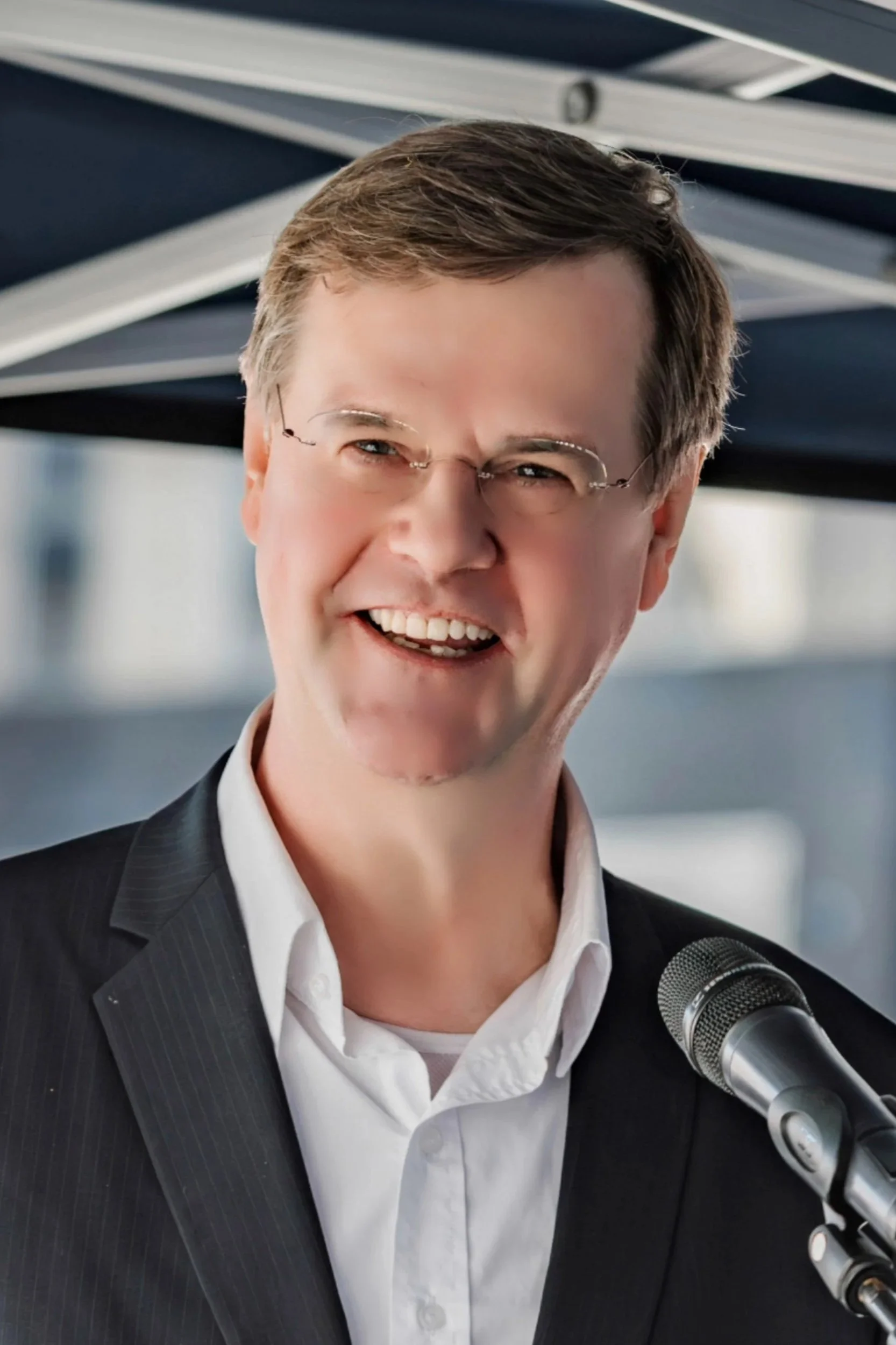
Prof Wolfgang Drechsler
WOLFGANG DRECHSLER is Professor of Governance at the Ragnar Nurkse Department of Innovation and Governance at TalTech (Tallinn University of Technology), Honorary Professor of University College London in the UCL Institute of Innovation and Public Purpose, and Adjunct Professor at the Faculty of Administrative Sciences at Universitas Indonesia. BA Bridgewater College, MA University of Virginia, PhD University of Marburg, Graduate German University of Public Administration Speyer, Habilitation Uni-versity of Tartu, SocScD (honorary doctorate) Corvinus University of Budapest.
Wolfgang previously taught at the Universities of Marburg, Giessen, Frankfurt/Main, and Tartu (Chair of Public Administration), and he was an Associate at Harvard University’s Davis Center for Russian and Eurasian Studies, 2017-2024. He was André Molitor Chair (professeur invité) at the Université catholique de Louvain; Visiting Professor at the Universities of Lund and of Erfurt, at the Central University of Finance and Economics Beijing, at the University of Malaya, at Zhejiang and at Gadjah Mada Universities, at NIDA Bangkok, and at the Lee Kuan Yew School, National University of Singapore; ANZSOG Visiting Scholar; Distinguished Visiting Professor of Public Value at Hamad Bin Khalifa University’s College of Public Policy; and most recently Visiting Professor at Universitas Airlangga, 2023. He was Erasmus faculty at the Universities of Salzburg (twice), again of Erfurt, and of Leiden (The Hague). Wolfgang served as Vice Dean for International Relations of the TalTech Faculty of Social Sciences, and on the Advisory Board of the Davis Center, both for six years; he declined to become founding Dean of the Graduate School of Public Policy at Nazarbayev University.
Wolfgang was PI of a Templeton project on ‘Islamic Public Value’ (€2 million, 2022-25) at UCL, now continuing as a network, and in Tallinn, associate and now member of the Advisory Board of the FinEst Centre for Smart Cities (€32 million), based on a PhD thesis written under his supervision. In civil service, he has been Advisor to the President of Estonia; Executive Secretary with the German Wissenschaftsrat during German Reunification; and, as an APSA Congressional Fellow, Senior Legislative Analyst in the US Congress. He was vice chair of PRAXIS, Estonia’s pre-eminent policy think-tank; member of the Innovation Policy Council of the Estonian Ministry of Economics; and member of the Lisbon Agenda Group. He chaired the Board of the European Association for Public Administration Accreditation (EAPAA), 2020-2023.
Wolfgang has been a consultant to international institutions such as the OECD, the Council of Europe, SIGMA, the World Bank, the European Union (especially Commission and Parliament), the Inter-American De-velopment Bank, and the UNDP; to national governments such as Bhutan, Germany, and Kosovo; and in the private sector. He is a Council Member of the Cologne Old Town Civic Association. Wolfgang received the Estonian National Science Award; the Alena Brunovskà Award and the Merit Award from NISPAcee; the Outstanding Alumnus Award from Bridgewater College; the Maarjamaa Rist, Estonia’s Order of Merit; the German Federal Merit Cross; TalTech’s Top Scientist award as best PhD advisor for three years in a row as well as currently; and the Senator Boorsma Award from SECoPA.
He is the author or editor of more than 25 books and journal issues and 200 scholarly articles, as well as editor-in-chief of Halduskultuur: The Estonian Journal of Administrative Culture, and member of the editorial boards of AJPA, BhJM, EJLE, IJPA, IRPP, JTCA, NISPAJPAP, RWER, Trames, and others. His book, How to make an Entrepreneurial State: Why Innovation needs Bureaucracy (with Rainer Kattel and Erkki Karo, Yale University Press 2022), won the Academy of Management’s 2023 Terry Award for “the most outstanding contribution to the global advancement of management knowledge during the last two years”, and it has been translated into Finnish (2024), Indonesian, Portuguese , Chinese (2025), and German (2026).
Wolfgang’s areas of interest comprise Non-Western PA, Governance, and Economics, especially Buddhist, Islamic, and Confucian; Technology, Innovation, & PA; and Public Management Reform generally. He also has an active interest in Political Philosophy and in Economic Theory. His regional foci are Southeast Asia and Central and Eastern Europe.